What It Costs
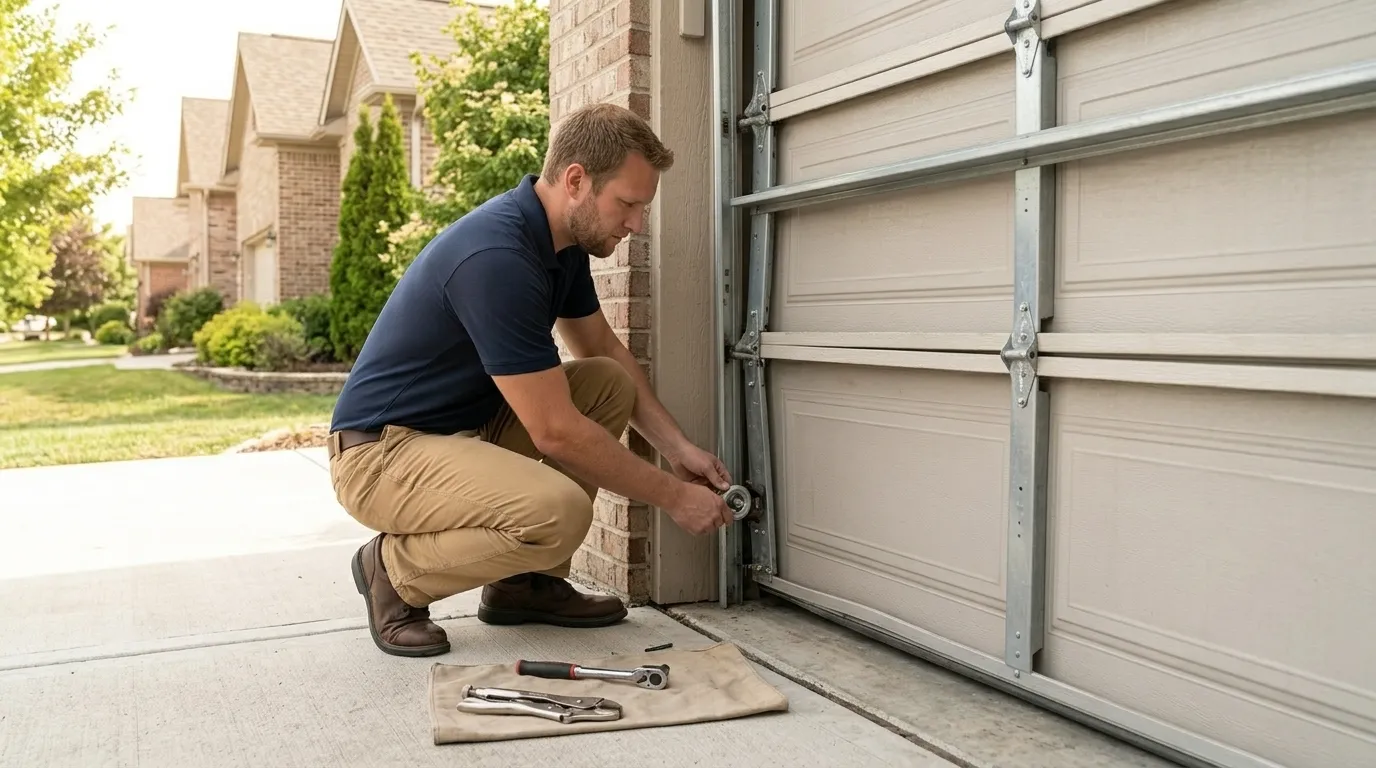
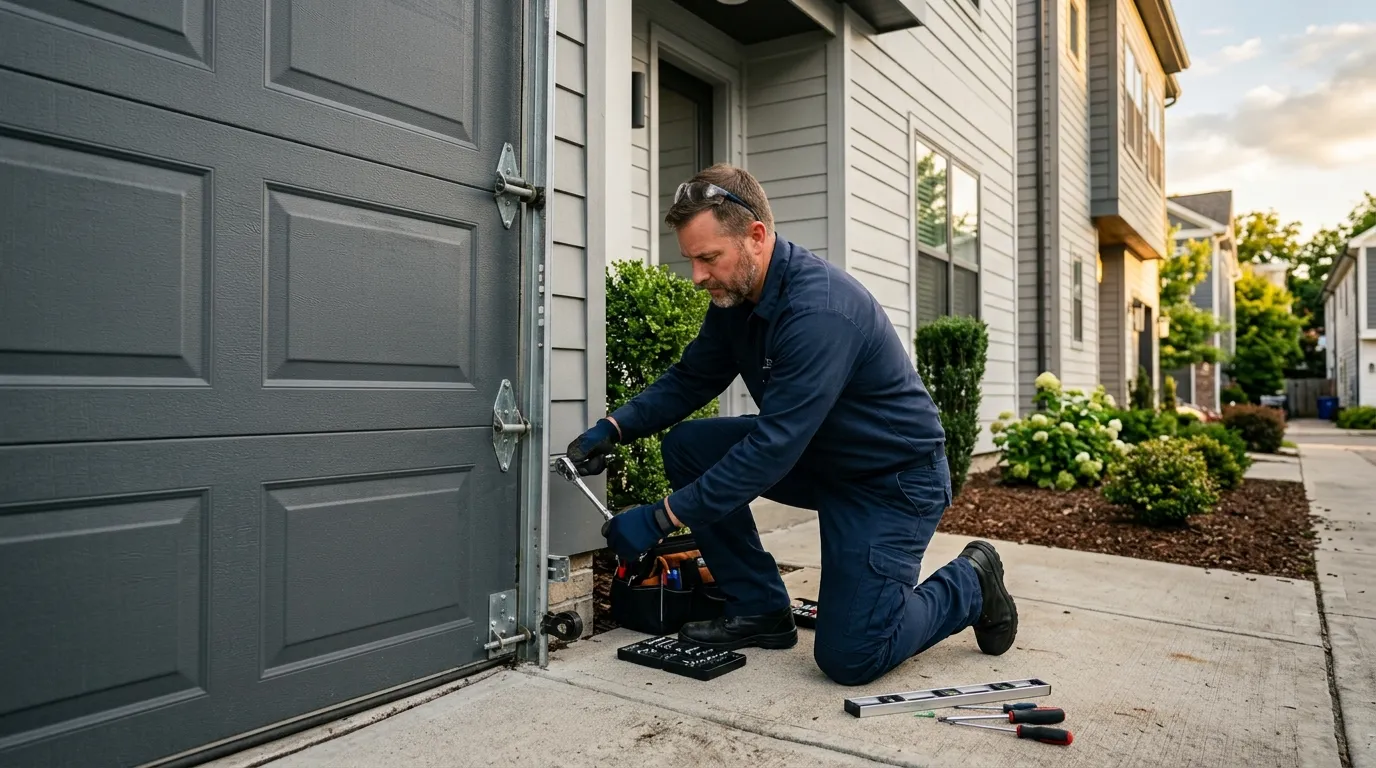
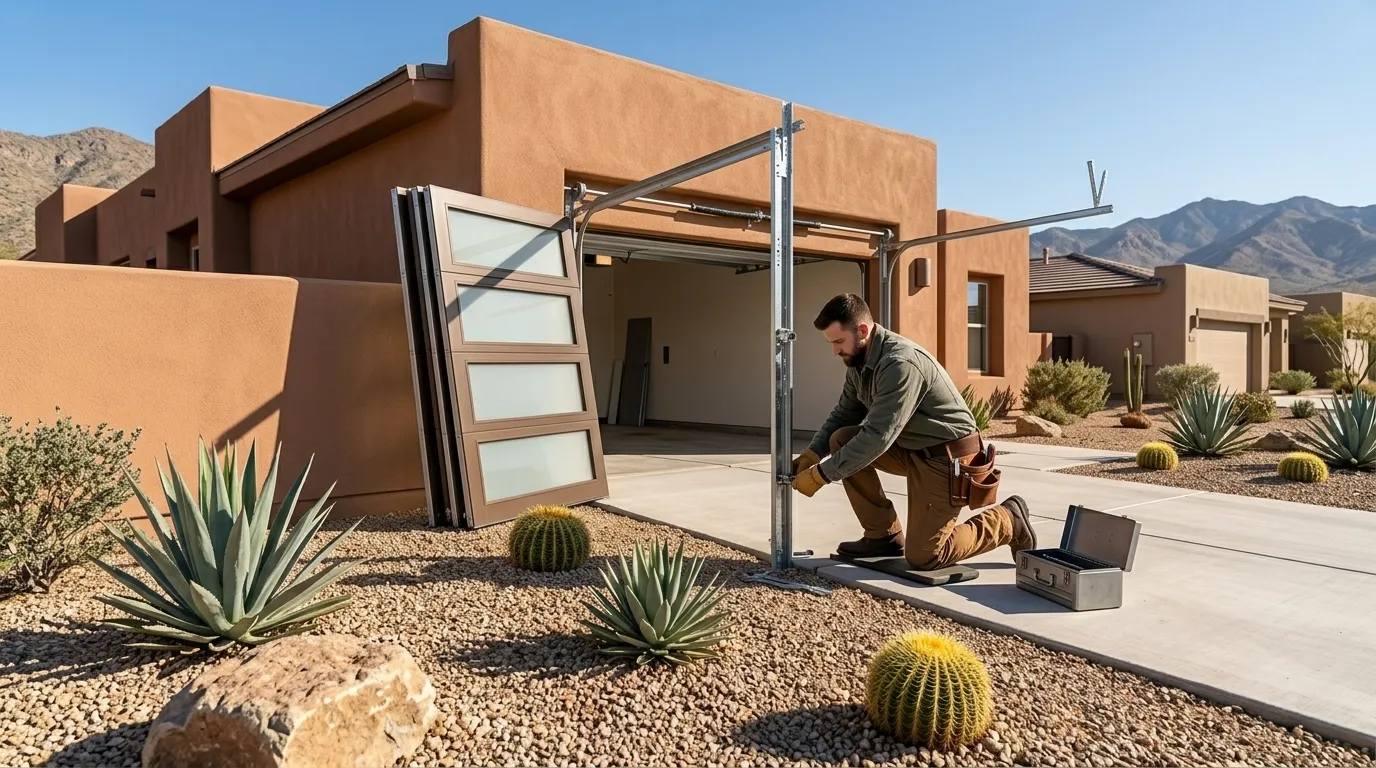
We don't quote a flat number for an off-track door over the phone, and we're not going to invent one here. What it costs depends on whether the track just got knocked loose from a bumped bumper or a kid's bike, or whether a cable snapped and let the door drop sideways, or whether the rollers themselves are shot and chewed up the track on the way out. Those are three different jobs with three different price tags.
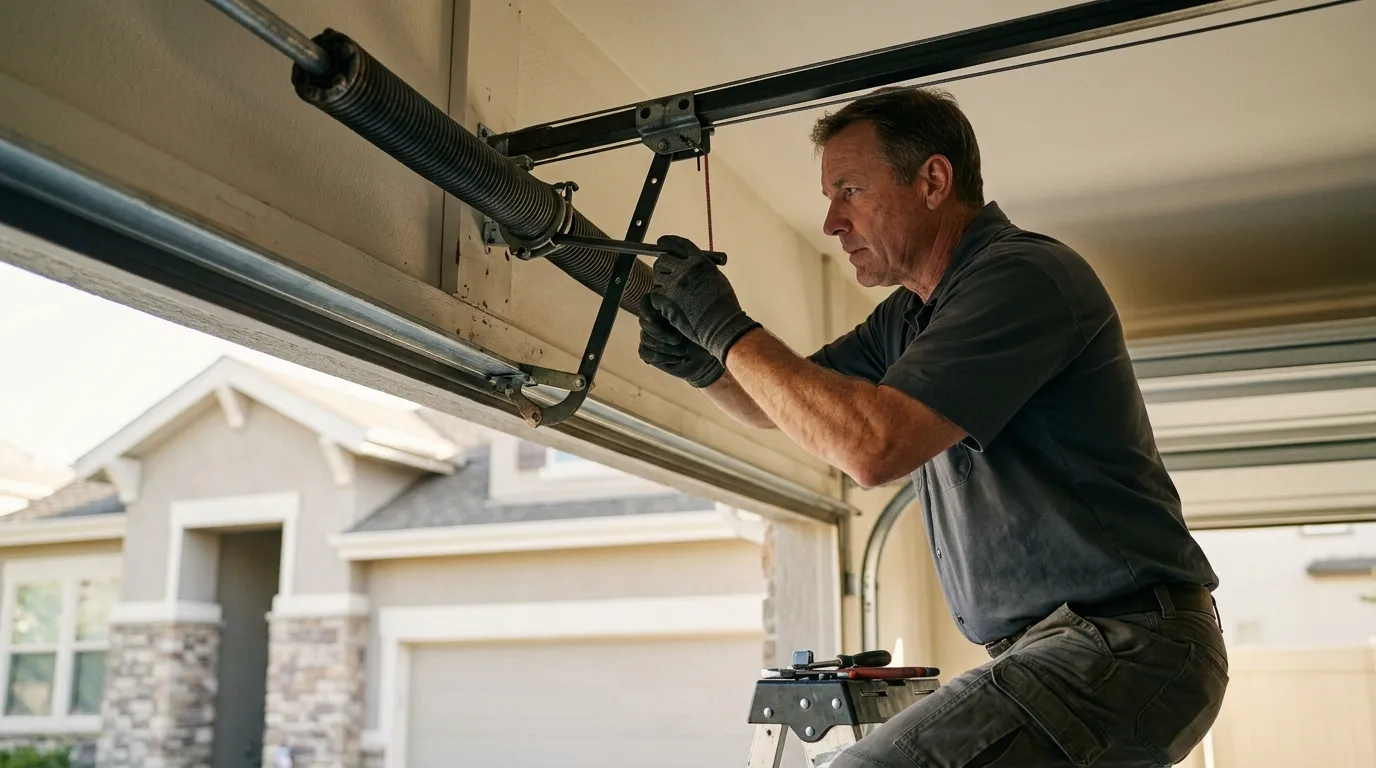
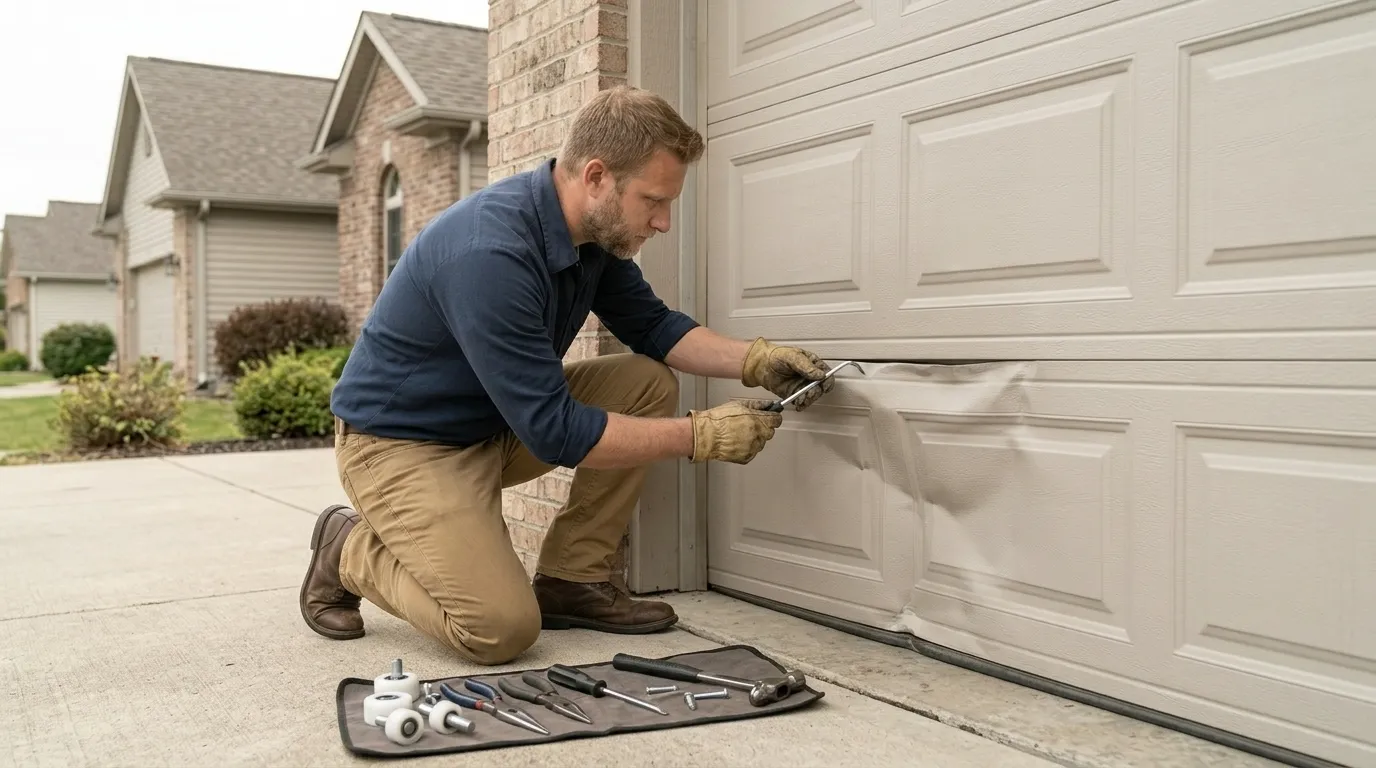
What we can tell you is what drives the number up or down: how many sections of track need replacing, whether the rollers are nylon or the older steel ones that are harder to source, and whether the opener's travel limits need resetting once the door is back on plumb. A door that's simply bent off the rail on one side is usually the cheapest fix we do. A door that's been run by the opener while off track - motor still trying to pull a door that isn't sliding straight - usually means we're also looking at the opener gear and possibly a bent panel, which changes the math fast.
We'll give you a number after we look at it, not before, because guessing on this one burns trust with homeowners we'd rather keep as customers for the next twenty years.
Why This Fails Locally
Across our service area - roughly 20,058 households, with about 13,623 of those in owner-occupied houses - most of the garage doors we work on are original or close to it, on housing built between 1965 and 2012, with the bulk of that stock going up in the 1980s and 90s. Track brackets and roller hardware from that era were built to the standards of the day, not to thirty-plus years of thermal cycling.
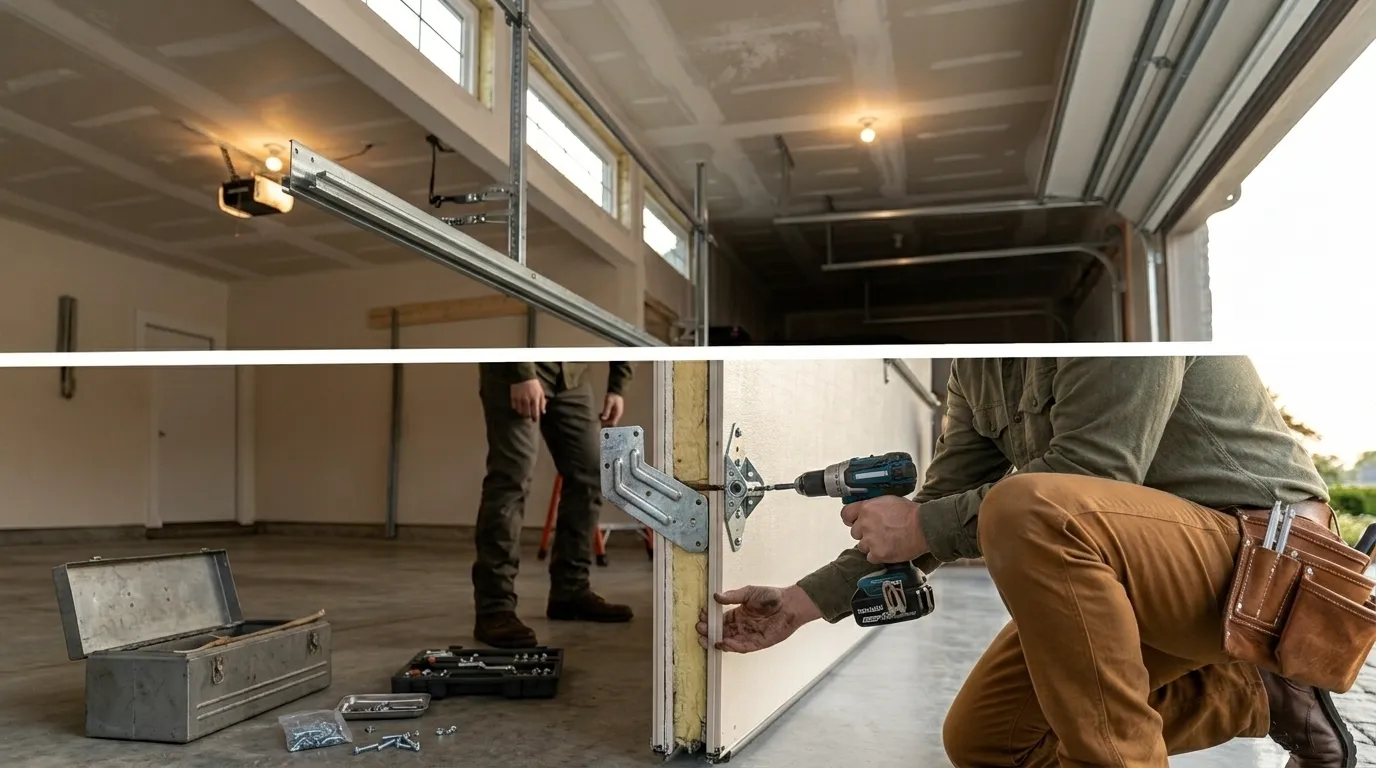
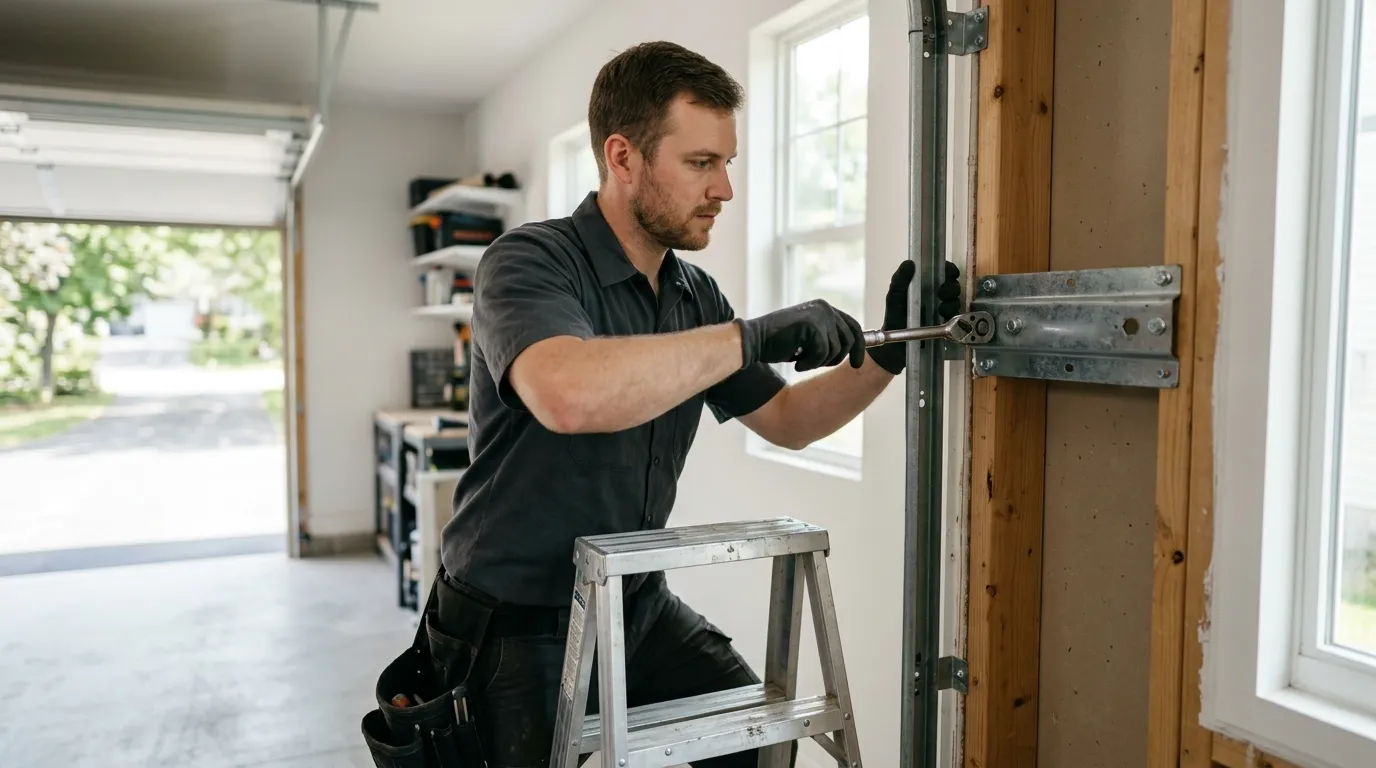
That matters here because we sit in a cold-moderate climate band. Track brackets are usually lag-bolted into jamb studs, and wood studs move with humidity and temperature swings. Over enough winters, that bracket backs out a sixteenth of an inch at a time until the track has just enough play in it for a roller to walk off the rail - often on a morning after a hard overnight cold snap when the metal has contracted and the door catches wrong on the first cycle.
We see this pattern across the seven areas that make up most of the housing stock here, not as something specific to any one street. Newer doors with galvanized track and sealed roller bearings hold up better against this, which is part of why replacement track sometimes makes more sense than re-bracketing old rail.
Parts We Carry
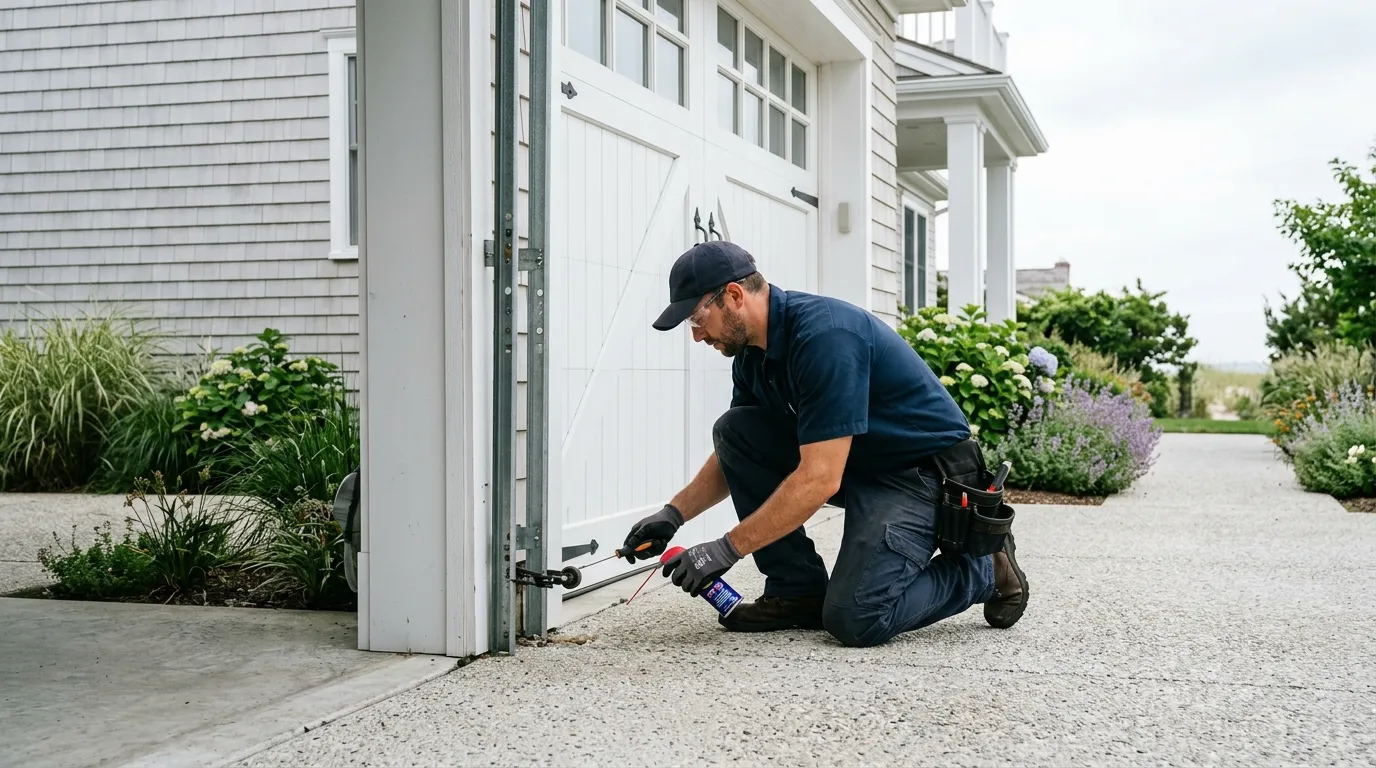
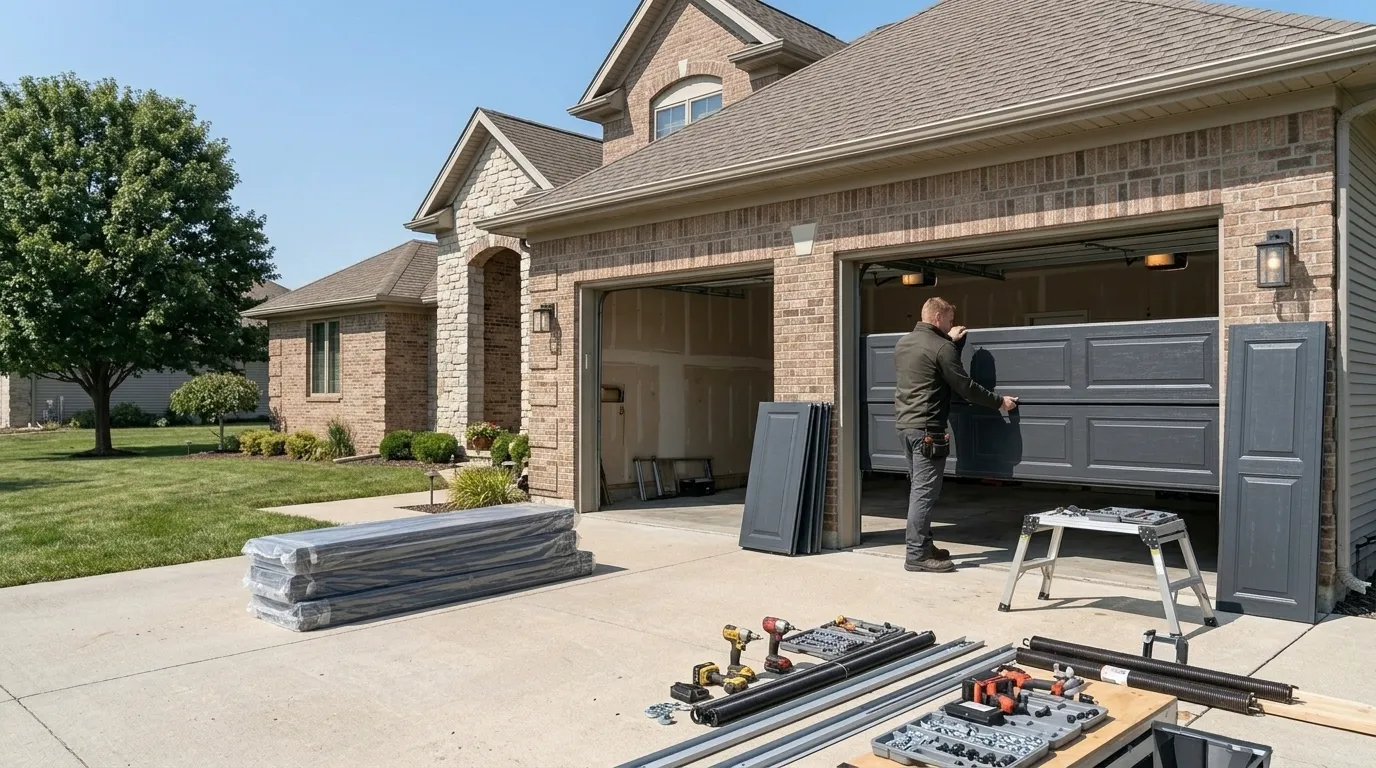
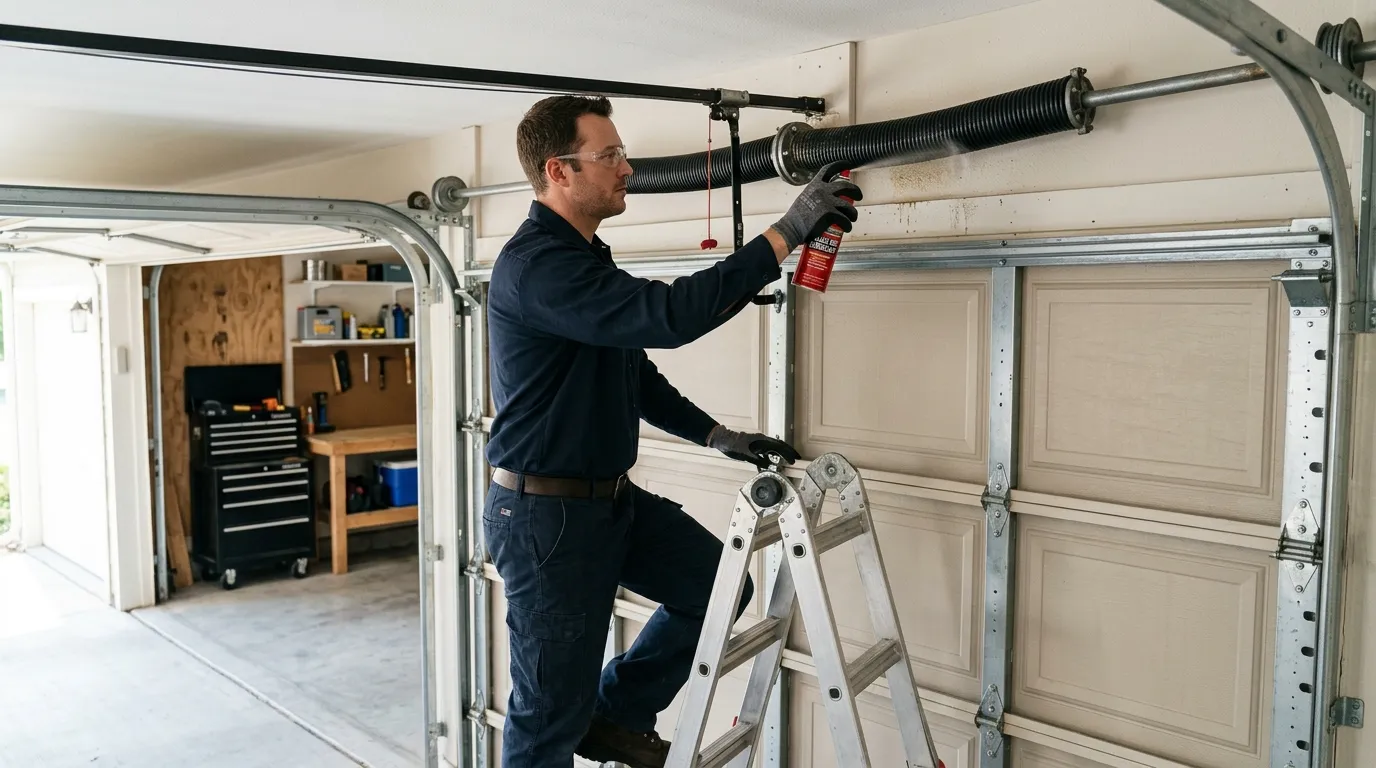
We keep standard steel track sections, common roller sizes in both nylon and steel, and the lag hardware and brackets that match the framing most houses out here were built with, on the truck. That covers the majority of off-track calls without a special order.
What we don't stock is every obsolete track profile from doors that are 30-plus years old and no longer made by the original manufacturer - if your door is one of the holdouts still running original hardware from the early end of that 1965-2012 build range, we may need to order a part rather than finish same-visit. We'll tell you straight if that's the case instead of forcing a mismatched part onto your door to get it done fast.
We run this area including out toward Rockvale, La Vergne, Eagleville, Nolensville, Rural Hill, and Woodbury, so we're generally not far when a track lets go, but the part on the shelf is what actually decides whether we fix it today or tomorrow.