When Waiting Is Fine
If your door still opens and closes on its own power, tracks straight, and the panels aren't cracked, you don't need to do anything right now. A faded finish or a few surface dents on a door that's been up since the 1980s or 90s is cosmetic, not structural. Weatherstripping that's gone stiff at the bottom will let in a draft, but it's a $20 part, not a reason to call anyone out. Same goes for a squeaky roller or a hinge that needs a shot of lubricant - that's maintenance, not an emergency. A lot of homeowners hear the word "insulation" and assume they need a new door immediately. You don't. If the garage isn't heated or cooled and doesn't share a wall with living space, the lack of a foam core in an older door isn't costing you much beyond a slightly colder garage in January. Save the call for when something actually stops working right, not because a door is old. Age alone isn't a failure.
What the Weather Here Does to It
Murfreesboro sits in a cold-moderate climate band, which means real winter swings - not extreme cold, but enough freeze-thaw cycling each year to matter. An uninsulated steel panel expands and contracts with those swings more than an insulated one does, and over enough winters that movement is what causes a door to bow slightly or a seam to work loose at the bottom corners. If your garage shares a wall with a bedroom or laundry room, that swing also shows up as condensation on the inside of the door on cold mornings - moisture that beads on bare steel and can eventually rust the bottom panel from the inside out. None of this happens overnight. It's a slow effect of decades of seasonal temperature change on a door that was never built with a thermal break. A newer insulated door handles the same swings without the same wear, which is one honest reason replacement sometimes makes more sense than another repair on a door this age.
When to Get Help
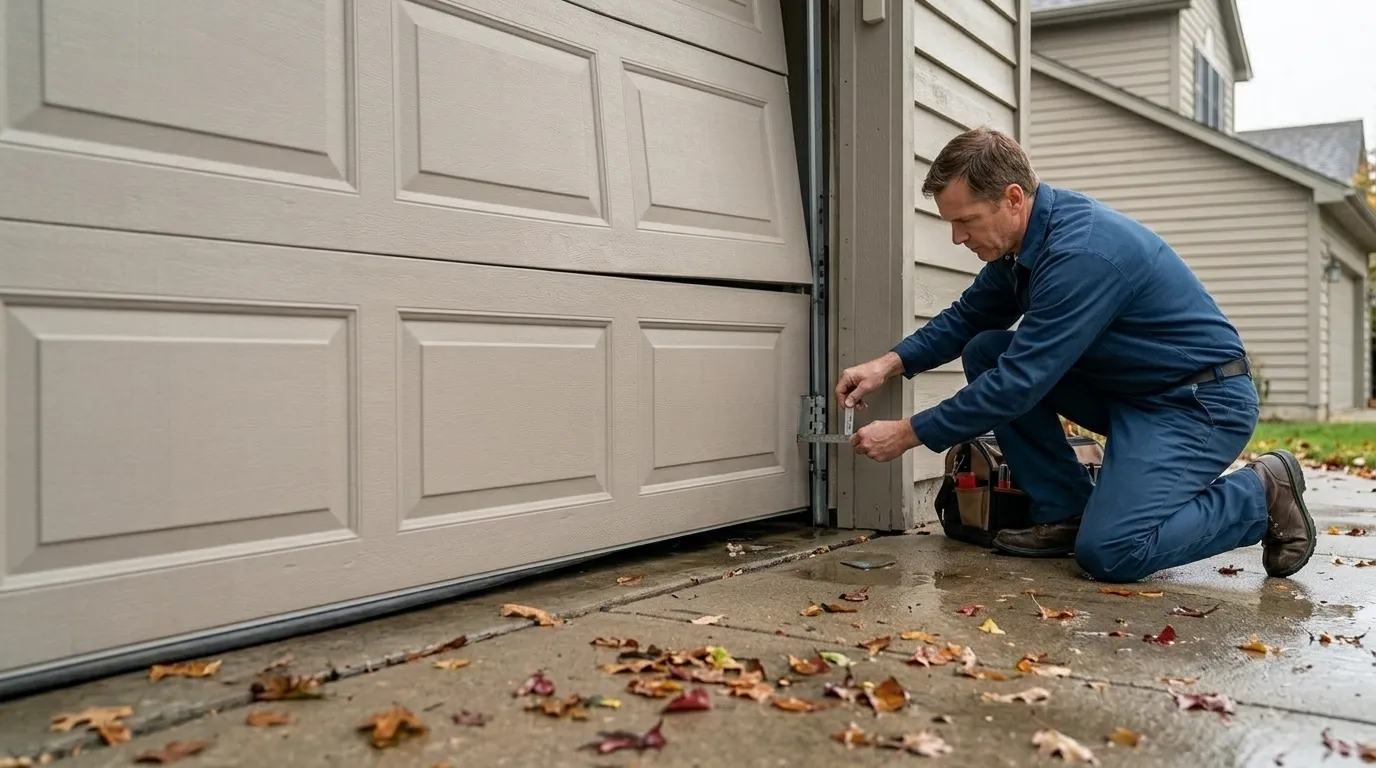
Call when the door is doing something it shouldn't: binding on the track, sagging visibly at the bottom, or making a grinding noise when the opener runs. On a door from the 1980s or 90s, we'll be straight with you - some panel styles from that era simply aren't made anymore, so a cracked panel might mean replacing the whole section rather than a quick patch. That's not us pushing a sale; it's a parts-availability problem that comes with a door this old. If the springs are original, they're well past a normal service life and worth having checked before they fail on their own, which they do without warning. Given a median household income of $84,310 across the area, a full insulated replacement is within reach for most owners here, and for a door already showing rust or warp from years of freeze-thaw movement, that's often the more sensible call than another repair. You can find contact details on our home page.