When Waiting Is Fine
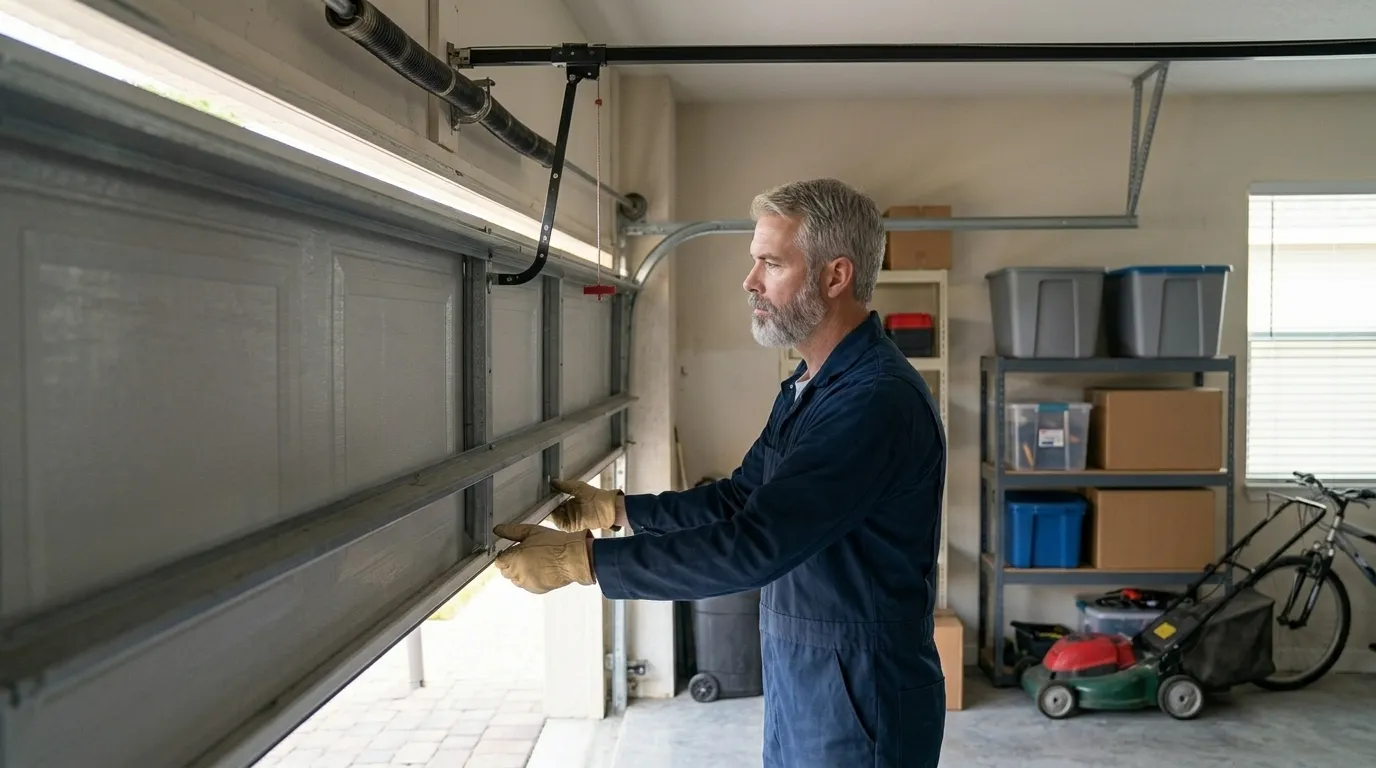
A power cut doesn't mean a broken door. Every opener made for a residential garage has a manual release cord - the red handle hanging from the trolley - that disconnects the carriage so you can lift the door by hand. If the power comes back inside a few hours, which is the usual pattern here, there's nothing to fix. Pull the cord, move the door yourself if you need the car out, and reconnect the trolley once power's back by pulling the release again and running the opener through one full cycle to re-engage it.
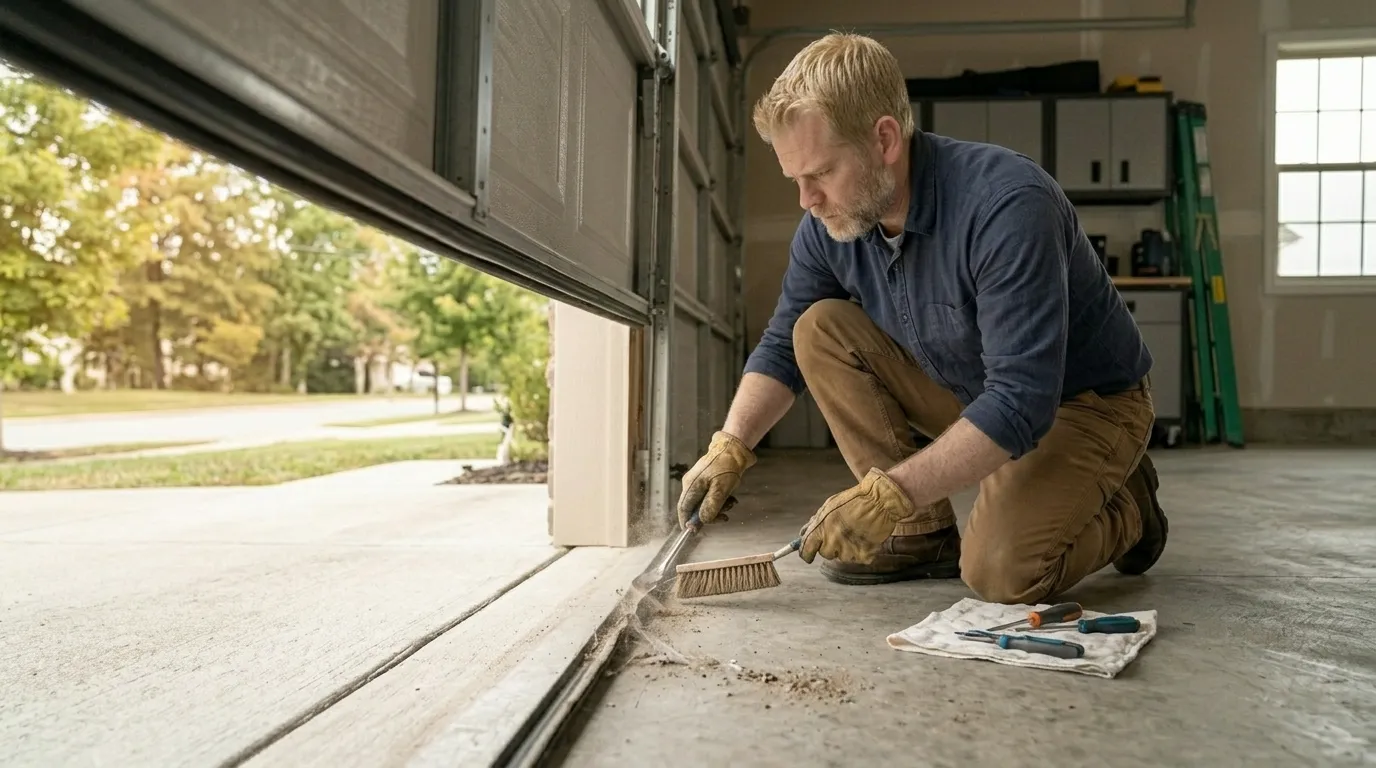
This is the case most nights: lights flicker, come back, and the opener just needs its safety sensors to re-align, which usually happens on its own the next time you hit the button. If the door reverses or won't close all the way after an outage, check that the two sensor eyes near the floor are still facing each other straight - a bump during a manual lift is the usual culprit, not a failed board. No call needed for that. Save the call for the opener that won't respond at all once power's confirmed on at the panel.
What the Weather Here Does to It
This is a cold-moderate climate, not a hurricane or wildfire one, and that shapes what actually causes the power cuts in the first place. Around here it's ice - a coating on the lines during a winter front - and the wind that follows an ice event, not summer storms, that knock out power to a block at a time. That's the scenario your opener needs to survive, not a hot-climate brownout.
Cold has a second effect that has nothing to do with electricity: it stiffens the door itself. Grease in the rollers and the spring coil thickens in low temperatures, so a door that's heavy to lift by hand on a mild day gets noticeably heavier during a cold snap - right when you're most likely to be using the manual release because the power's out. If you're pulling the release cord during an ice event, expect the door to feel stiffer than usual, and don't assume that stiffness means a broken spring. It usually loosens up once temperatures climb back above freezing.
When to Get Help
Call if the opener stays dead after you've confirmed power is back at the breaker panel and at the wall switch - that's a sign the board or the motor itself took damage from the outage, not just the countdown clock resetting. Call if the manual release cord won't re-engage the trolley, meaning the opener runs but the door doesn't move with it. And call if you're pulling the release by hand and the door won't stay up on its own or slams down - that's a spring problem, not an opener problem, and a heavy cold door with a weak spring is a real risk to hands and fingers.
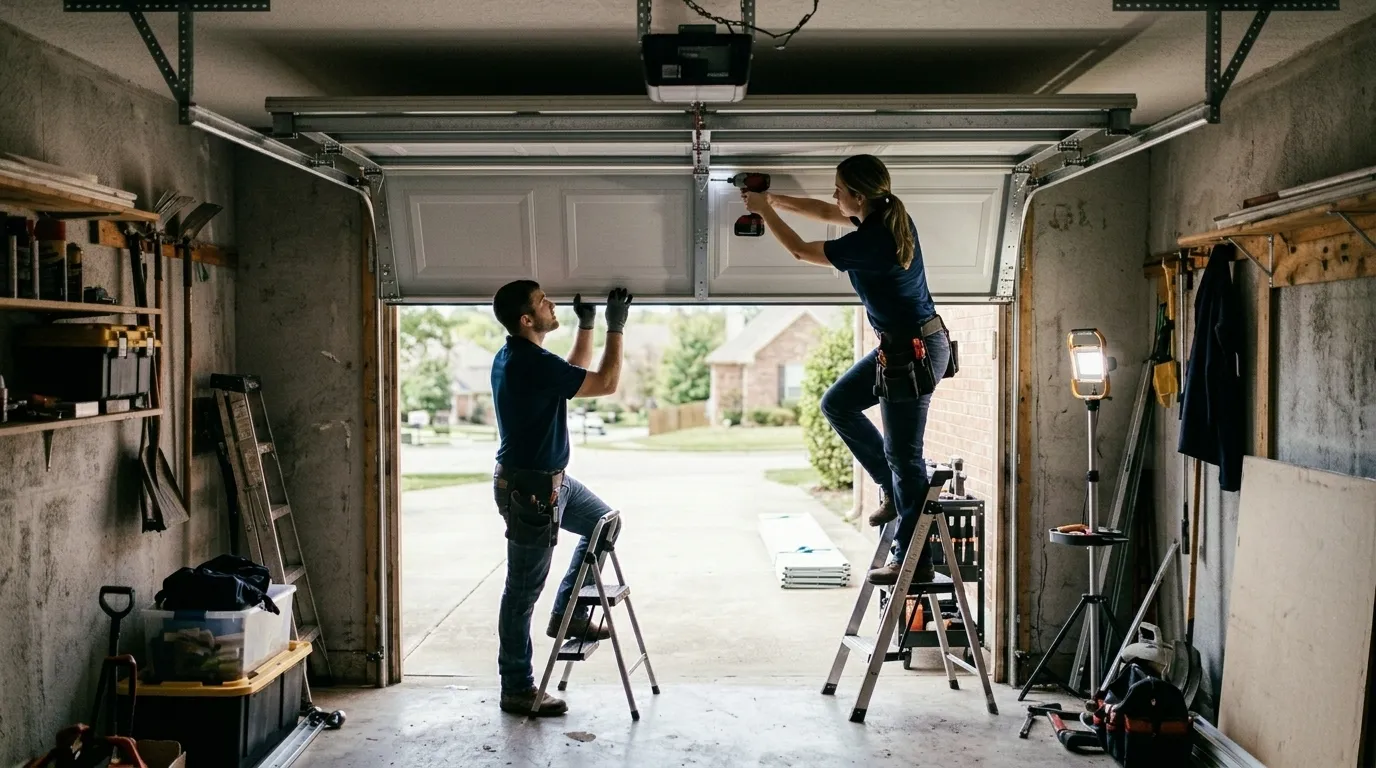
With a median household income of $84,310 across this area, a battery-backup opener is a realistic upgrade for most owners here rather than living with a dead opener every time the lines ice over. It's worth asking about at replacement time, especially if your unit is already past the age where parts are getting hard to find.