When Waiting Is Fine
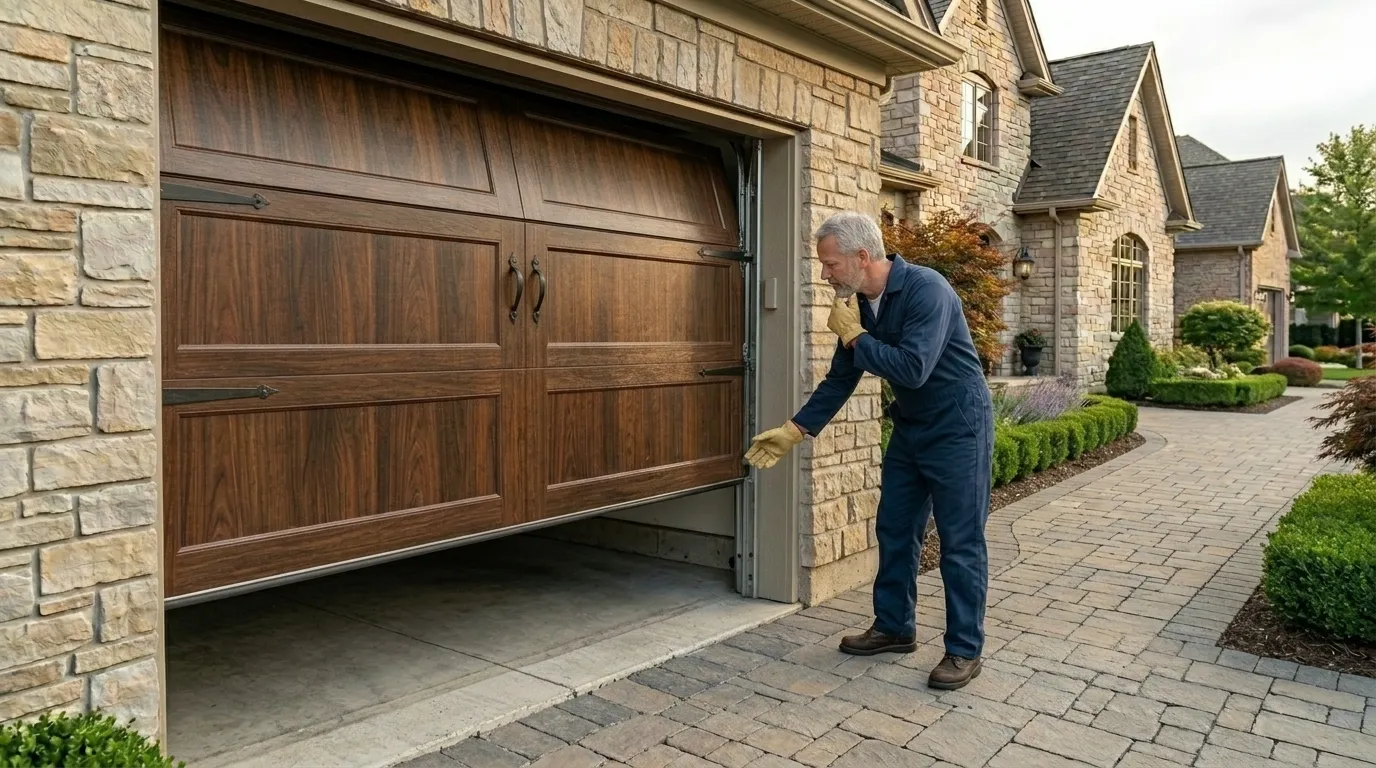
Not every problem needs a truck out today. If the door still opens and closes on its own weight, tracks straight, and the only complaint is a dented bottom panel or a sensor that needs a wipe-down, you can wait for a scheduled visit instead of paying for an emergency call. A lot of the doors we look at here are original to homes built in that 1965-to-2012 stretch that makes up most of the local housing stock, with the median landing around 1994. A thirty-year-old door that's been maintained isn't automatically a replacement job just because of its age.
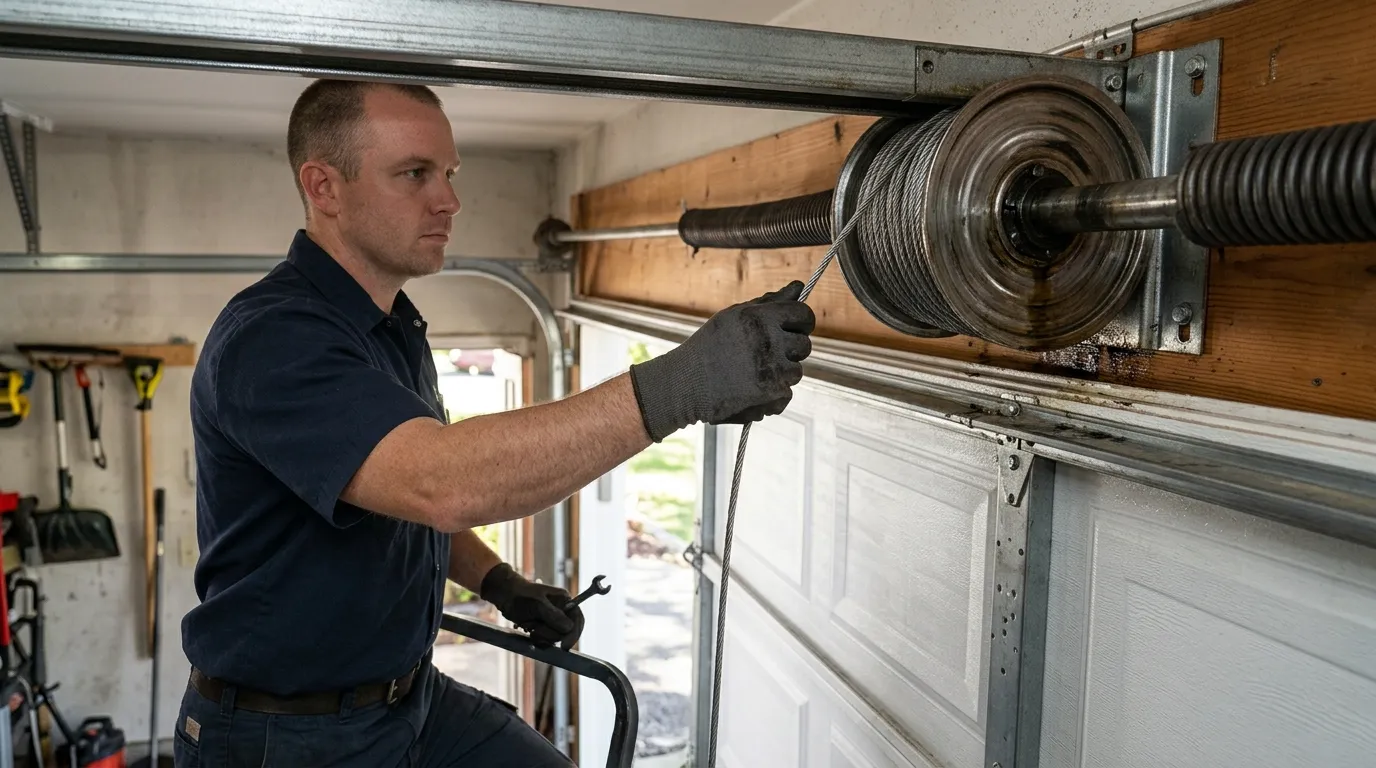
Cosmetic wear - faded paint, a loose weatherstrip, a squeak that only shows up on the first cold morning - is a maintenance item, not a safety item. Where we draw the line is anything touching the spring, the cable, or the opener's force settings, because those fail suddenly rather than gradually. If your door is quiet, level, and reverses properly when it hits something, you're fine to book ahead rather than treat it as urgent.
What the Weather Here Does to It
Murfreesboro sits in a moderate-cold climate band, which matters more to an older door than most owners expect. It's not extreme cold that does the damage - it's the repeated freeze-thaw swing through the winter months. Water gets into a seam or a bolt hole during a thaw, then freezes and expands overnight, and over enough winters that cycle works rust into places a warmer town would never see it: spring coils, hinge pins, the bottom corners of steel panels where condensation collects.
A door built in the 1980s or 90s wasn't finished with the corrosion coatings you'd see on newer stock, so the metal underneath is more exposed once the factory paint chips. That's a big part of why a torsion spring on an older Murfreesboro door tends to lose its temper unevenly - one side cycling through more moisture than the other - and why bottom panels are usually the first place we see rust-through on a house from that era. It's not damage from a single storm; it's accumulated wear from decades of ordinary winters doing what they do here.
When to Get Help
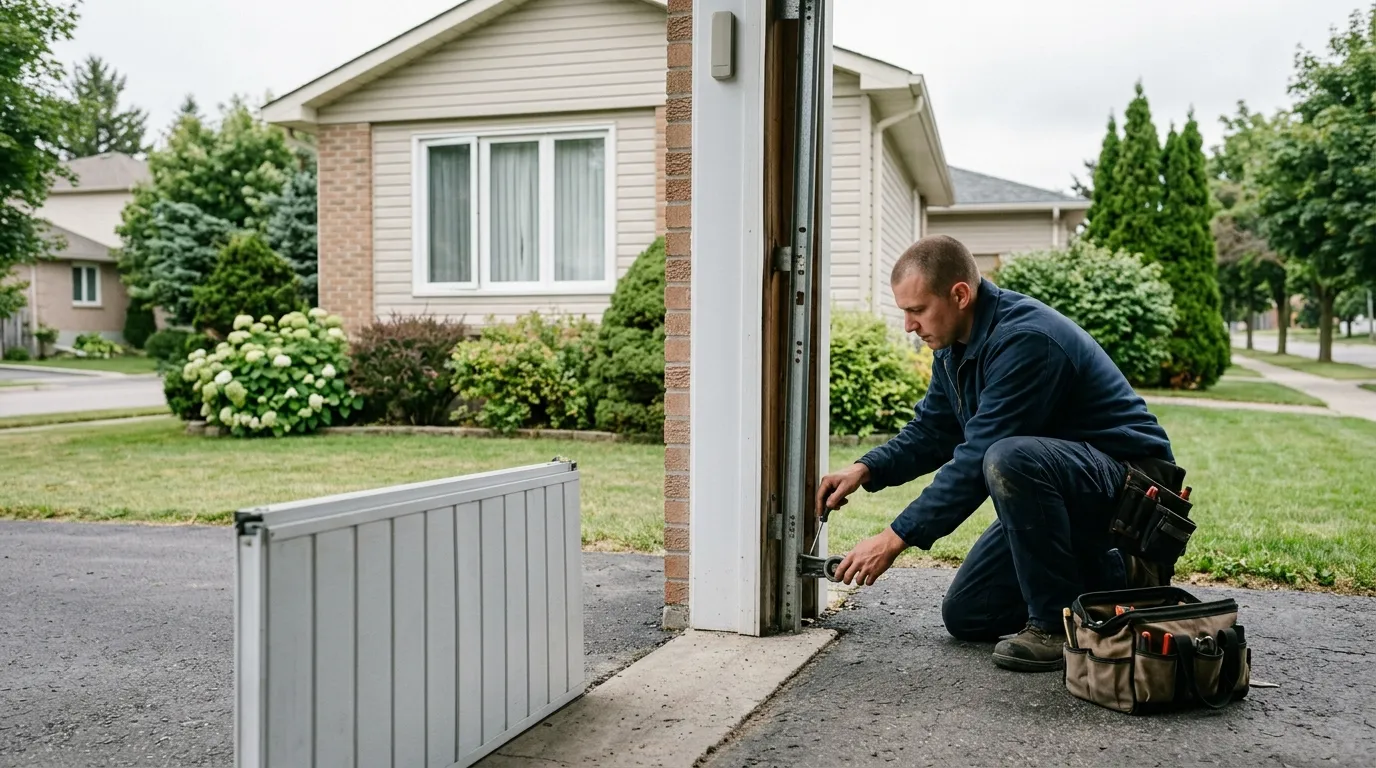
Call in a repair, not a replacement, when the door is structurally sound but one system has failed - a broken spring, a snapped cable, a worn roller set, a bracket that's pulled loose. Those are contained jobs on a door that still has years in it.
Where we'll tell you honestly that repair isn't worth it: if the door has multiple panels rusted through, or if it's an older design where the manufacturer no longer makes a matching panel, patching one section can leave you with a visible mismatch or a door that's out of square no matter how it's adjusted. At that point the parts cost starts to close in on a new door anyway, and with the median household income in this area around $84,310, most owners we talk to would rather put that money into a full replacement than keep feeding an old frame.
One limitation worth saying plainly: we can't always source an exact panel match for a discontinued 1980s or 90s line, even when the rest of the door is fine. If your damage is limited to one section and the model's still in production, repair makes sense. If it's not, we'll tell you that up front instead of ordering a part that won't match.