Parts We Carry
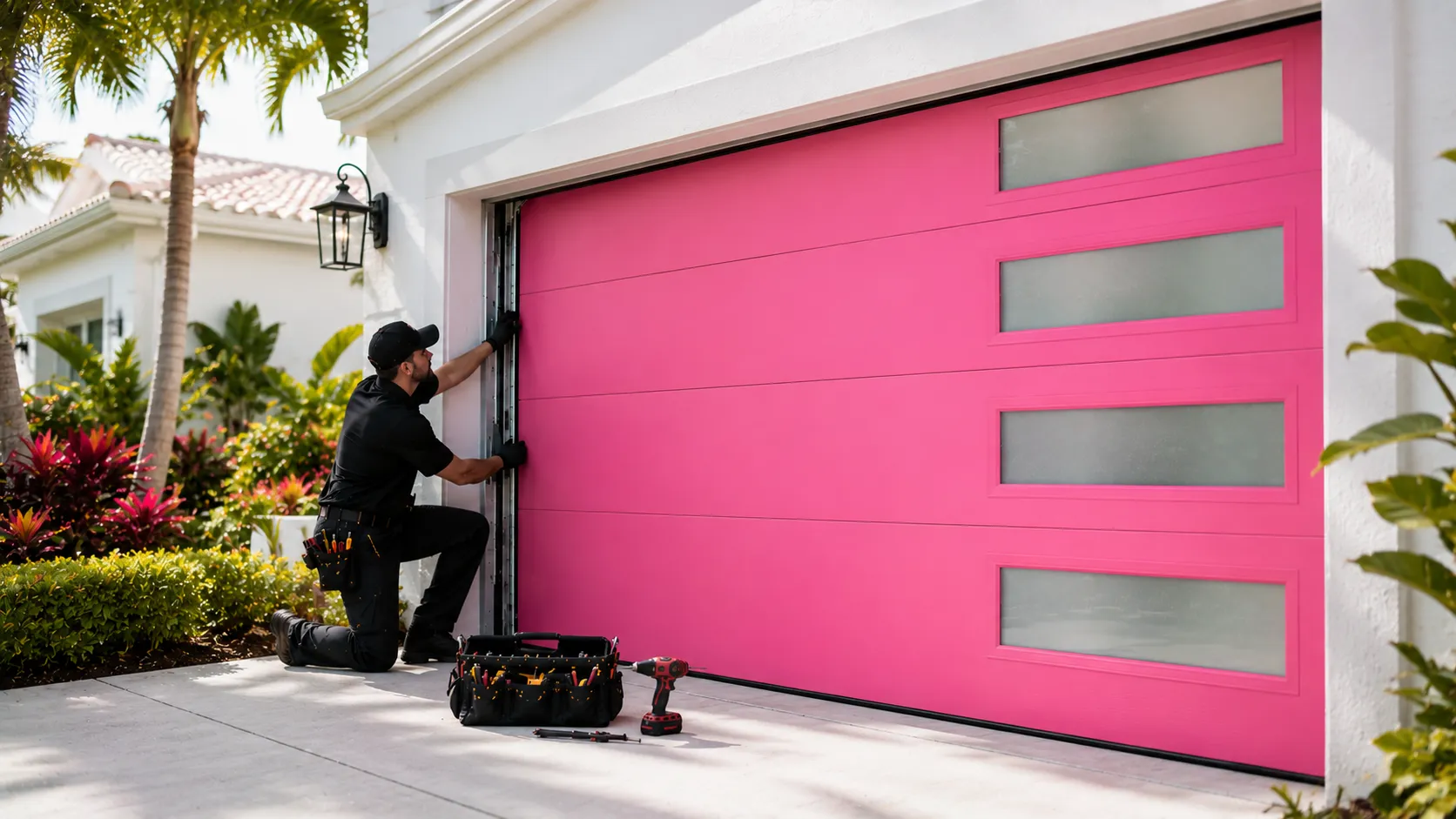
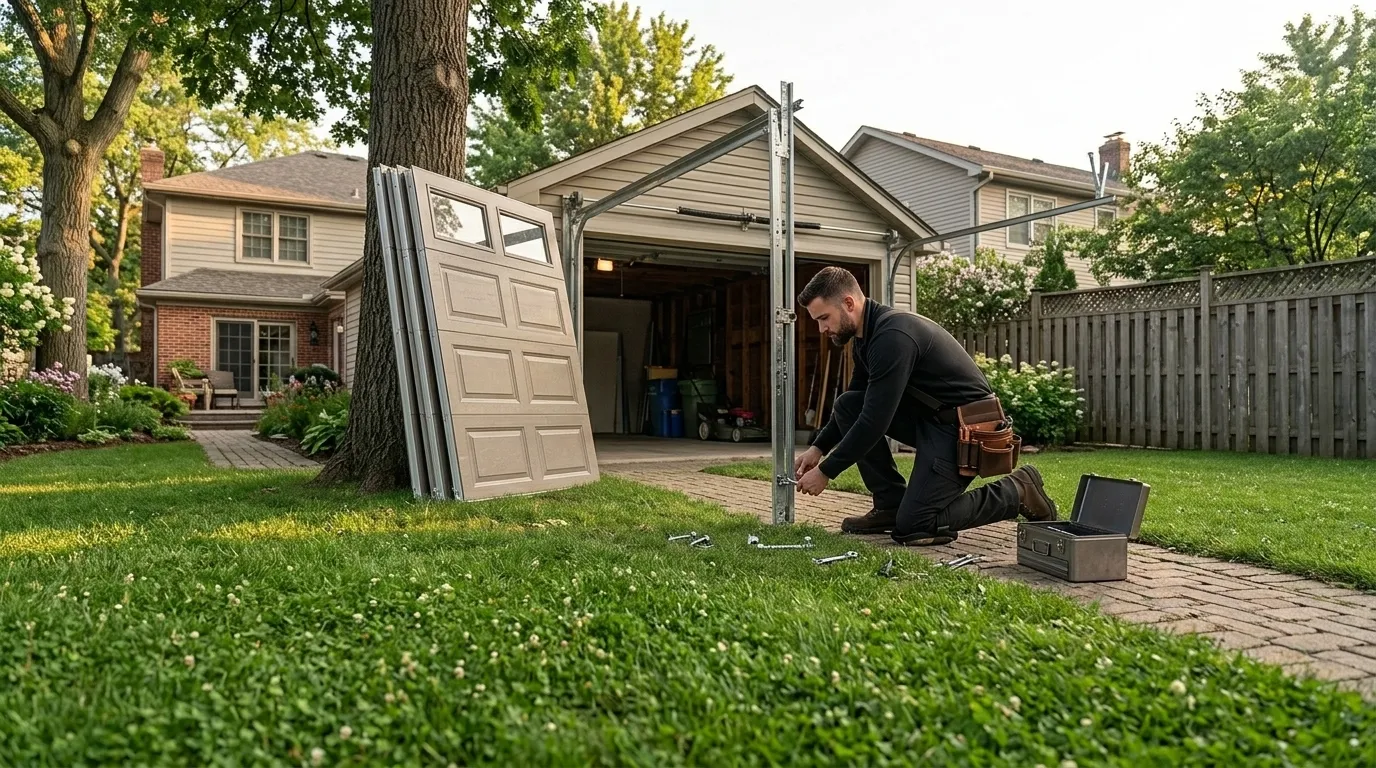
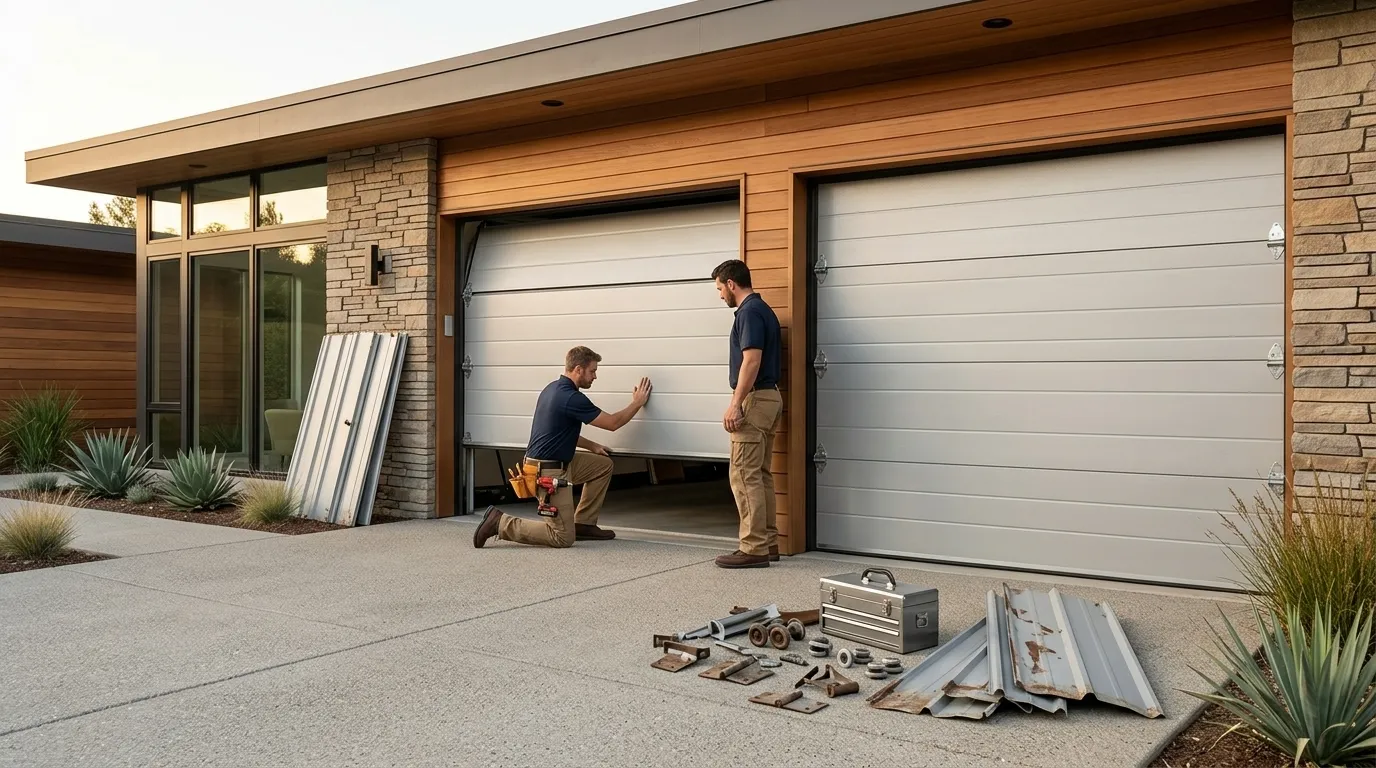
Most commercial buildings in Nolensville are recent construction, and that changes what's actually on the door. The median home and building stock across the wider service area landed around 1994, but Nolensville's own median year built runs closer to 2012. That means the bay doors we see out here are almost always factory-insulated steel sectional units, not the single-layer or wood-panel doors you'd find on an older strip of shops. We carry torsion springs sized for the wider commercial openings that go with newer light-industrial and retail bays, high-cycle counterbalance hardware for doors that open dozens of times a day, and commercial-grade openers built for that duty cycle rather than the residential units some builders try to save money with. One honest limit: some oversized commercial sections and specialty color-matched panels aren't something we keep on the truck. If your door was ordered custom when the building went up, that panel may need to come from the manufacturer, and that's a lead-time conversation we have with you up front, not after we've started the job.
What You Are Seeing
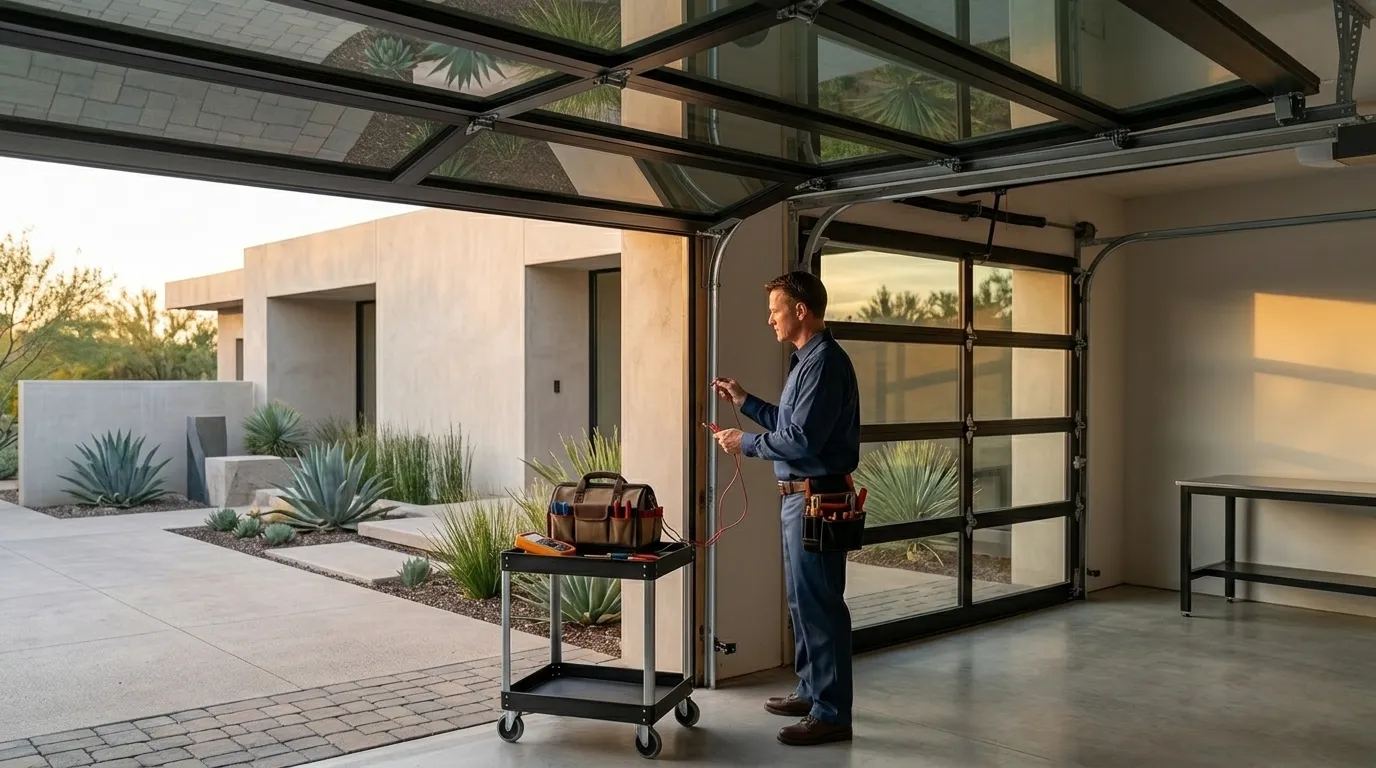
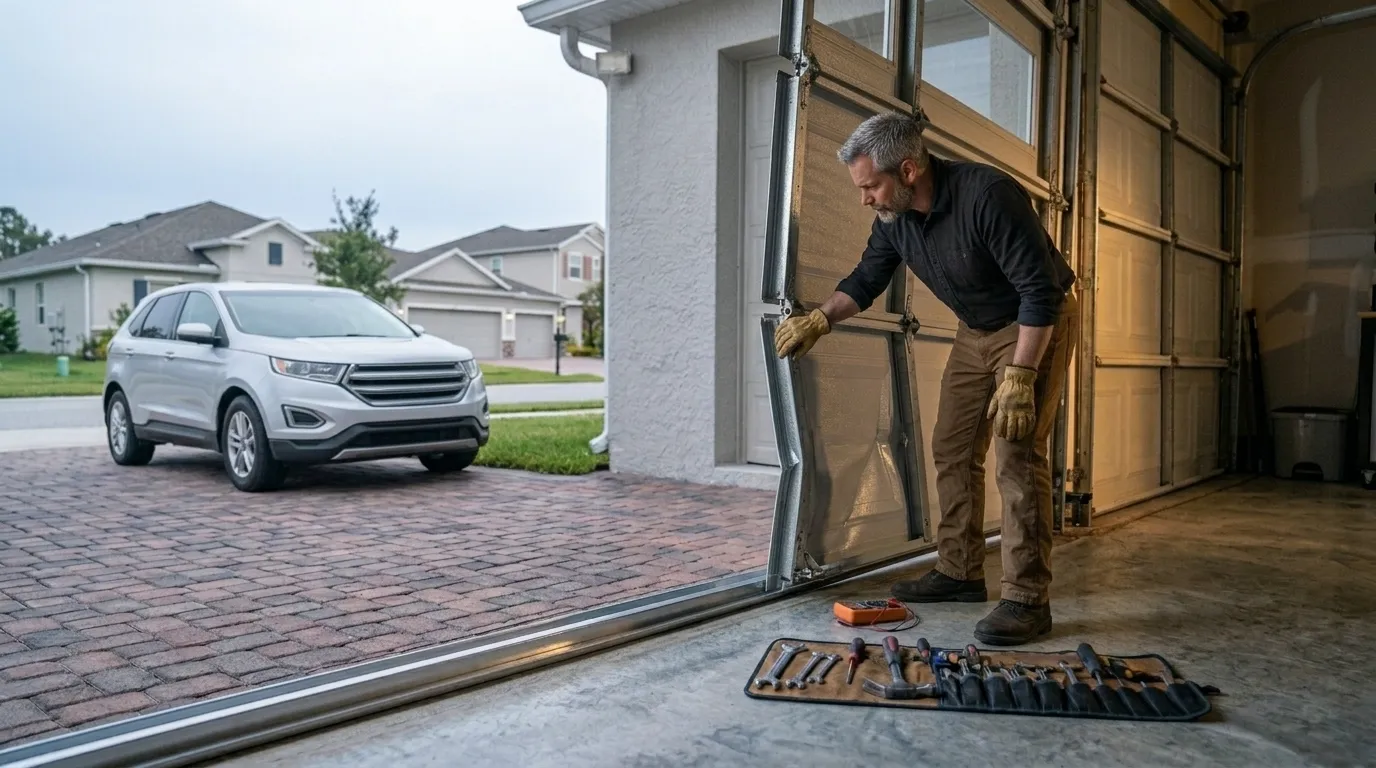
On a newer commercial door, the symptoms usually point to the opener before the door itself. An error code flashing on a commercial logic board, a door that reverses partway up for no obvious reason, or a photo-eye that reads as blocked when nothing is in the way are the calls we get most from this side of the area. Insulated steel panels take damage differently too - a delivery truck backing in too fast dents a foam-core panel in a way that looks worse than a single-layer door but is usually a straight panel swap, not a frame repair. High household income across Nolensville, sitting well above the $84,310 median for the wider service area, tends to show up here as owners choosing full panel or full door replacement over patch repairs once a section is damaged, rather than living with a cosmetic dent. If your door is under five years old and still under warranty terms from the installer, that's worth checking before you pay for a repair we could otherwise handle.
Doing It Yourself
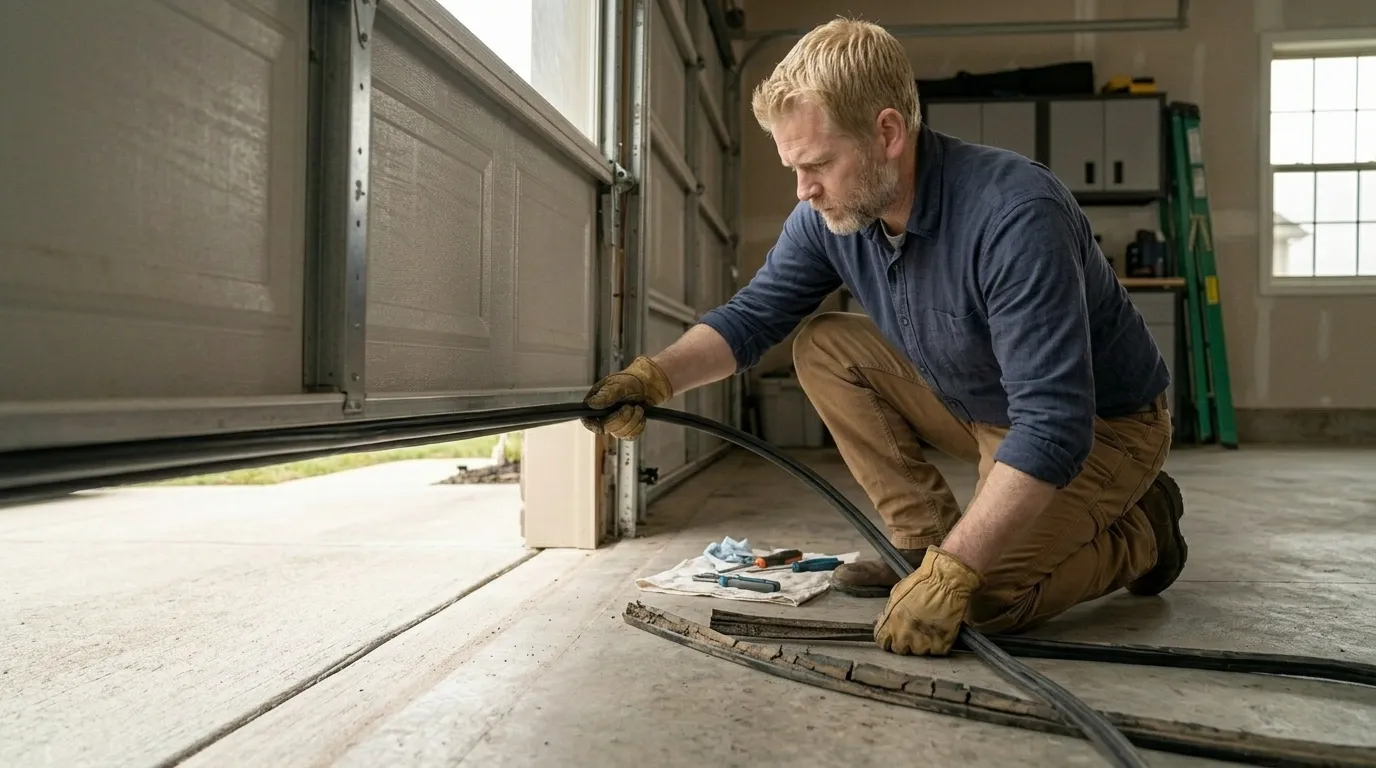
Before you call, there are a few checks that don't need a tool. Watch the door cycle once and see if it reverses cleanly off the floor sensor test - most commercial openers have a safety reversal test in the manual, and it takes thirty seconds. Look at the track for anything visibly bent or a roller sitting outside the rail rather than in it. Check whether the photo-eye sensors are aimed at each other and not covered in dust or blocked by stacked inventory, which is common on a working dock. What you should not do on a commercial door is touch the torsion spring or the cable drum. These doors are heavier than a residential door and the springs are wound under far more tension to lift that weight - that's not a DIY adjustment on any door, and it's less forgiving on a commercial-sized one. If the door won't close, won't open past a few inches, or the opener is grinding without moving the door, stop and call rather than working around it.
Why This Fails Locally
A generic commercial door page written for the whole service area assumes the building is old enough to have deferred maintenance and mismatched hardware - springs from one decade, an opener from another, a panel replaced once already with the wrong gauge steel. That's not what we find in Nolensville. With a median year built around 2012 and household income more than double the wider area's median, the buildings here are newer, the doors are more likely original to the structure, and the failures are wear-and-cycle problems rather than decades of neglect stacked on top of each other. A tech who shows up expecting a 1990s door on 1990s hardware will bring the wrong spring, misdiagnose a sensor issue as a track issue, and waste a trip. The fix here is usually smaller and faster than an older building's, but only if the visit starts from what this stock actually is, not from an assumption carried over from somewhere else in the county.